
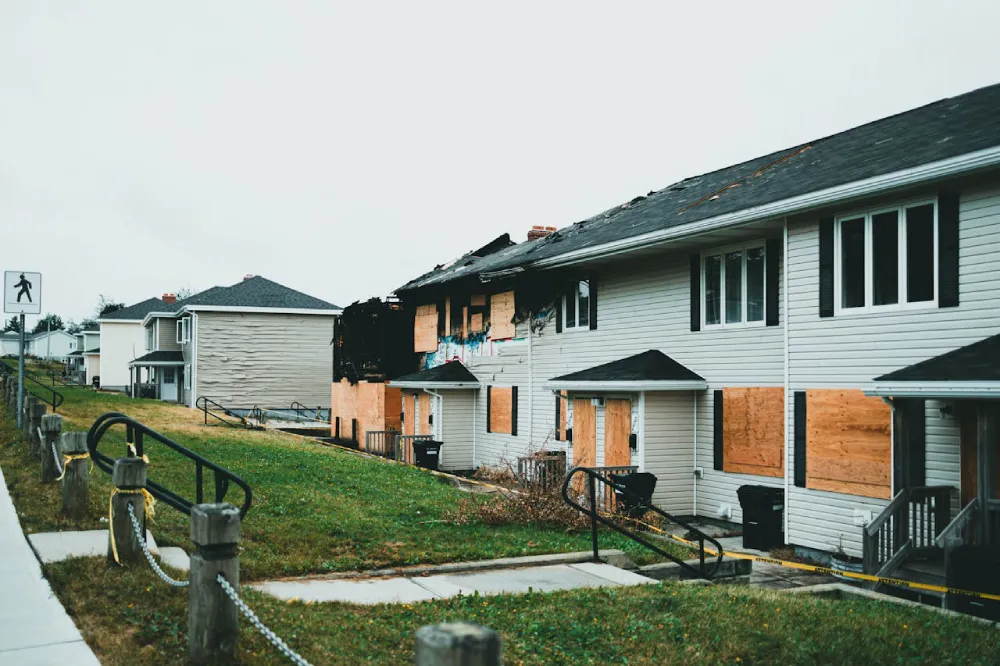
Board up and roof tarping are temporary ways to protect a property when fire, hail, wind or another event creates an opening. They can help reduce further exposure while the permanent repair plan is developed.
Important: board up and roof tarping should never be presented as finished repair. They stabilize an immediate condition; they do not restore damaged roofing, walls, windows, doors or structural components.
When does a property need stabilization?
Temporary protection may be appropriate when part of the building envelope is open, cannot close correctly or no longer provides reasonable weather protection or security.
When an opening needs immediate attention, request emergency property stabilization in Regina and keep occupants away from unstable, electrical or structurally damaged areas.
What does roof tarping do?
Roof tarping provides temporary weather protection over an opening or seriously damaged area. When correctly selected and installed for the conditions, it may help limit additional rain or snow entry until the roof can receive a full assessment and permanent repair.
What temporary roof protection may do
- Cover an exposed roof area
- Direct some rain or snow away from the opening
- Reduce continuing weather exposure
- Provide time to assess and plan permanent work
What roof tarping does not repair
- Damaged or missing shingles
- Broken or weakened decking
- Failed flashing
- Structural roof damage
- Damaged vents or roof penetrations
A qualified roof inspection and repair contractor should determine what permanent work is required after the immediate exposure is controlled.
What does board up do?
Board up closes accessible openings created by broken glass, damaged doors, fire or impact. The installation method should suit the opening and avoid unnecessary additional damage to components that may remain repairable.
Cover a broken window, damaged door or exposed exterior section.
Limit direct entry of wind, rain, snow and debris.
Make obvious points of entry more difficult to access.
Support boundaries around unsafe or unoccupied parts of the property.
After a fire, professional fire and smoke damage restoration may connect board up with water removal, debris assessment, smoke cleaning and later reconstruction.
Temporary protection versus permanent repair
The difference should be clear from the beginning. Stabilization reduces immediate exposure; permanent repair restores the damaged building component.
What happens after stabilization?
Once the immediate opening is controlled, the wider loss can be assessed. The next steps depend on whether water, fire, smoke, impact or structural movement affected surrounding materials.
Full-service property damage restoration connects the temporary response with moisture assessment, permanent exterior repairs and interior reconstruction instead of ending when the opening is covered.
For a wider post-storm inspection sequence, review the guide to storm damage restoration in Regina.
Why should damage be photographed first?
When it is safe, photographs help preserve the original condition before temporary work changes the appearance. They can support the contractor’s assessment, property records and insurer communication.
Photograph when safely accessible
Capture wide views, the damaged opening, nearby components, visible interior effects and the temporary protection after installation. Record the date and known cause.
Do not enter an unsafe area
Do not climb onto a damaged roof or approach unstable walls, broken glass, downed electrical lines, active fire conditions or standing water near electricity just to obtain photographs.
In an emergency, KB Better Construction can document visible conditions during stabilization and use those findings to help define the assessment and repair stages that follow.
Temporary work should protect the property without obscuring the next step: investigate the complete damage, correct water entry and complete permanent repairs.
Frequently asked questions
Is roof tarping permanent?
No. A roof tarp is temporary weather protection. The damaged roof still requires assessment and permanent repair.
Why board up a property after a fire?
A fire can break windows, damage doors or leave exterior openings. Board up can close those openings, reduce weather exposure and help restrict unauthorized entry.
Is tarping part of restoration?
It can be an emergency stabilization stage within a larger restoration project. It does not replace moisture investigation, repair or reconstruction.
What happens after roof tarping?
The roof and surrounding areas are assessed, water entry is investigated and a permanent repair scope is developed.
Is your Regina property exposed after a storm, fire or impact?
Request help with temporary stabilization, damage assessment and the permanent repairs that follow.