

Commercial flat and low-slope roofs behave differently from residential shingle roofs. Hail can affect membrane surfaces, seams, flashing, penetrations and drainage areas. A roof may also have damage without an immediate interior leak.
Professional commercial roofing services in Regina should evaluate the whole roof system, including existing membrane condition, ponding, flashing separation and earlier repairs—not only the most obvious impact mark.
Which roof components need inspection?
Select each component in the diagram to see why it matters after hail or severe weather.
Interactive commercial flat-roof inspection map
Membrane: review the field surface for punctures, fractures, displaced surfacing, impact marks and changes around underlying insulation.
Seams: inspect joined membrane sections for separation, lifting, cracking or deterioration.
Flashing: check walls, roof edges and transitions where movement or impact can create a water-entry point.
Penetrations: review seals and flashing around pipes, vents and other components passing through the roof.
Curbs: inspect raised equipment supports and their corners, seams and flashing connections.
Drains: check strainers, outlets, surrounding membrane and drainage paths for blockage, impact or deformation.
Perimeter details: inspect roof edges, parapets, caps and terminations exposed to wind and hail.
Previous repairs: check patches and altered areas for new damage or separation from surrounding materials.

Can hail damage the membrane without causing a leak?
Yes. A defect may not allow enough water through during the original storm to create an immediate interior symptom. Conditions can change during later rainfall, snowmelt, temperature movement or ponding.
Exterior damage can exist first
Impact may affect the membrane, surfacing, seams or underlying assembly before water reaches a visible ceiling or occupied room.
Interior symptoms can appear later
The next major rainfall may reveal a pathway that was not obvious during the original hail event.
No visible ceiling stain does not prove the roof is undamaged. After significant hail, inspection is the appropriate way to evaluate exterior conditions.
Why are seams important?
Many membrane systems rely on properly formed seams to connect roof sections. Existing age, movement or deterioration combined with impact can increase vulnerability at these transitions.
KB Better Construction evaluates seams together with flashing, penetrations, drainage and the surrounding membrane so one visible defect is not treated as the entire roof condition.
Why does drainage matter?
Flat roofs are not intended to hold unlimited water. Roof slope, drains, scuppers and related details are designed to move water away. Blocked or damaged drainage can contribute to persistent ponding, which may increase the effect of an existing membrane or flashing defect.
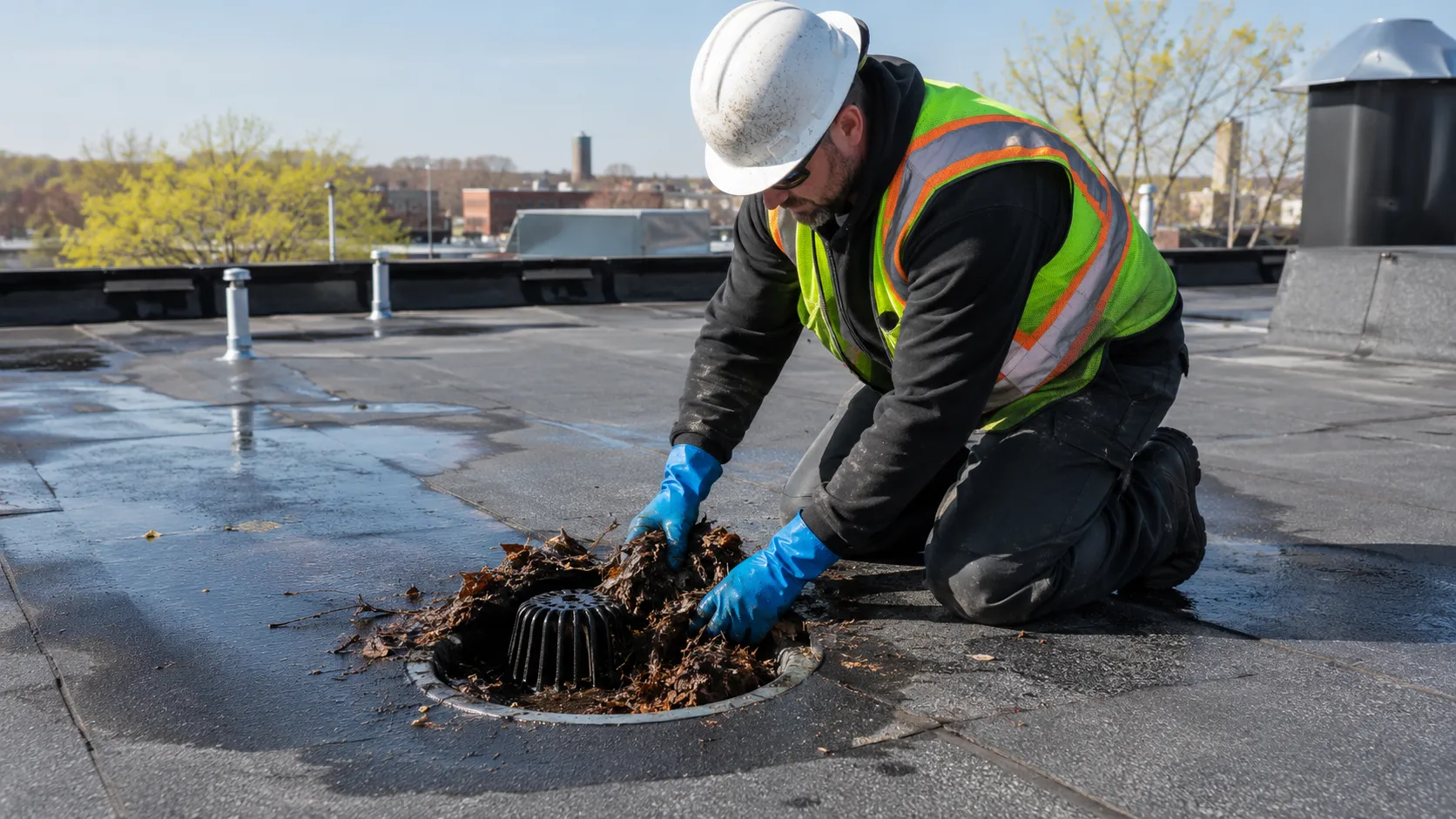
Drainage inspection points
- Blocked drain strainers
- Debris restricting water flow
- Damage around drain flashing
- Standing-water patterns
- Changes around scuppers or outlets
- Low areas near earlier repairs
When a localized defect can be corrected, professional commercial flat-roof repair should also address surrounding conditions contributing to water entry or repeated ponding.
What interior signs should building managers watch?
Interior observations cannot replace a roof inspection, but they can help identify when water may already have entered the building or roof assembly.
If roof water reaches ceilings, walls or occupied areas, coordinated commercial water-damage restoration can connect source control with moisture assessment, drying and reconstruction.
Property managers can also use the guide to commercial water damage and business continuity when tenant spaces or operations are affected.
Should a hail-damaged flat roof be repaired or replaced?
The answer should follow the roof’s condition and expected performance rather than hail impact alone. Select a starting condition below to see how the assessment changes.
Interactive repair-or-replacement guide
Localized damage
Repair may be considered when defects are limited, surrounding materials remain serviceable and the affected area can be integrated reliably with the existing system.
Widespread damage
Replacement may become more practical when impact or defects extend across several areas and isolated patches would leave widespread vulnerability in place.
Moisture in the roof assembly
The location and extent of wet insulation or underlying materials can expand the scope beyond a surface membrane repair.
Aging or deteriorated roof
Expected remaining service life, earlier repairs and existing deterioration should be considered before investing in another localized repair.
Where isolated repairs are impractical, review commercial flat-roof replacement options as part of the building’s longer-term plan.
Do not choose repair or replacement from one photograph. The decision should combine impact damage, existing condition, assembly moisture, drainage and repairability.
Frequently asked questions
Can hail puncture a commercial roof membrane?
Hail can damage some roof membranes depending on hail severity, membrane type, support beneath the surface and the roof’s existing condition.
Does ponding mean the flat roof failed?
Not automatically. Persistent ponding should still be investigated because it may indicate drainage, slope or localized roof-condition problems.
Should a commercial roof be inspected without an interior leak?
Yes. After significant hail, an exterior inspection can identify membrane, seam, flashing, penetration or drainage damage before an interior symptom appears.
Was your Regina commercial building affected by hail?
Request an inspection of the membrane, seams, flashing, penetrations, drainage and interior warning signs.