
Material that is intact and left alone may present a different risk from material that will be cut, broken, sanded or removed during renovation.
Asbestos testing and abatement in Regina
Test before you disturb. Remove only what the project requires.
KB Better Construction coordinates asbestos assessment, compliant abatement and the reconstruction needed after hazardous materials are removed.
Suspect material cannot be identified reliably by sight. Do not cut, sand, scrape, drill or collect a sample yourself.IICRC-Certified FirmCompany ID #70219440
Owner LedLocal project accountability
Abatement + RebuildOne plan through renovation
Planning demolition in a Regina property built or renovated before 1990?Pause work and have suspect materials assessed before contractors disturb ceilings, flooring, drywall systems, insulation or mechanical-room materials.
When testing is needed →Start with the right question
What is asbestos abatement?
Asbestos abatement is a controlled process for managing confirmed asbestos-containing material. Depending on its condition and the planned work, the appropriate response may be removal, enclosure, encapsulation or leaving intact material undisturbed under a management plan.
Testing comes before the abatement decision. A laboratory result identifies whether the sampled material contains asbestos; the project assessment then determines the risk and work method.
Older properties are more likely to contain legacy materials, but only representative sampling and laboratory analysis can confirm a specific product.
The assessor needs to know exactly which ceilings, floors, walls, pipes, attic areas or exterior products the project will disturb.
Worker protection, risk classification, containment, procedures, disposal and inspection must follow applicable provincial occupational health and safety requirements.
Regina renovation-risk map
Where should homeowners be most cautious?
There is no public database proving that one Regina neighbourhood has the most asbestos. The most defensible local indicator is building era: mature areas with concentrations of pre-1990 homes deserve earlier testing in the renovation plan.
Highest-priority callout
Cathedral and Old Lakeview
The City specifically recognizes Cathedral and Lakeview for their heritage and character-building concentration. These areas include many pre-war and post-war properties, so renovations involving original or older replacement materials should budget for testing before demolition.
This does not mean every home contains asbestos. It means the age and renovation history make assumption-based demolition especially unwise.
Neighbourhood names are screening cues, not findings. Newer homes can contain reused or imported products, and older homes may have been fully remediated. Test the material—not the postal code. See the City’s neighbourhood profiles and its Cathedral and Lakeview community-character work.
Common suspect materialsCeilings Walls Floors Attics Mechanical rooms Exterior and utility areas
What gets tested before a Regina renovation?
Sampling decisions should match the materials the project will actually disturb. Common candidates include:
Stipple, texture and ceiling tile
Decorative coatings, acoustic textures and some ceiling products may require sampling before scraping or demolition.
Drywall compound and plaster systems
Joint compound, patching materials and some plaster assemblies can differ between rooms and renovation eras.
Vinyl tile, sheet flooring and adhesive
The finish layer, backing and black or other mastics may need separate representative samples.
Vermiculite insulation
Do not disturb pebble-like loose-fill insulation. Its source cannot be determined reliably from appearance alone.
Pipe, boiler and duct insulation
Friable wraps, elbows, cement products and gaskets can require higher-control work methods.
Siding, roofing and cement products
Some bonded products may contain asbestos and can release fibres if cut, drilled, ground or broken.
From renovation plan to clean handoff01 02 03 04 05 06
A six-stage asbestos project
Define the work area
Identify every material the renovation or restoration will disturb.
Qualified assessment
Inspect suspect materials and create a representative sampling plan.
Laboratory analysis
Use accredited analytical results to identify asbestos-containing samples.
Risk-classified scope
Select removal, enclosure, encapsulation or management based on condition and work.
Controlled abatement
Apply required containment, worker protection, cleaning and disposal procedures.
Inspection and rebuild
Complete required verification, then restore removed finishes and assemblies.
Removal is not always the only option
Remove, encapsulate or manage in place?
Removal
Often selected when renovation will disturb the material, it is damaged or access will be difficult later.
- Creates a defined abatement scope
- Requires appropriate disposal
- Usually followed by reconstruction
Encapsulation or enclosure
May be considered when material is stable and can remain protected without interfering with planned work.
- Not appropriate for every material
- Must remain documented
- Future disturbance still requires planning
Management in place
Intact material outside the work area may be left undisturbed with records, labelling and periodic review.
- Avoids unnecessary disturbance
- Requires owner and contractor awareness
- Does not mean the material is removed
Why KB is competitive
Plan abatement around the renovation—not apart from it
Dedicated asbestos competitors emphasize testing, containment and disposal. KB adds a practical advantage: construction planning before abatement begins and coordinated repairs after the enclosure comes down.
- Scope sampling around the real demolition plan
- Coordinate third-party consultants or laboratories when required
- Document confirmed materials and completed work
- Plan access, demolition and reconstruction as one sequence
- Restore insulation, drywall, ceilings, flooring and finishes
What safe abatement looks like
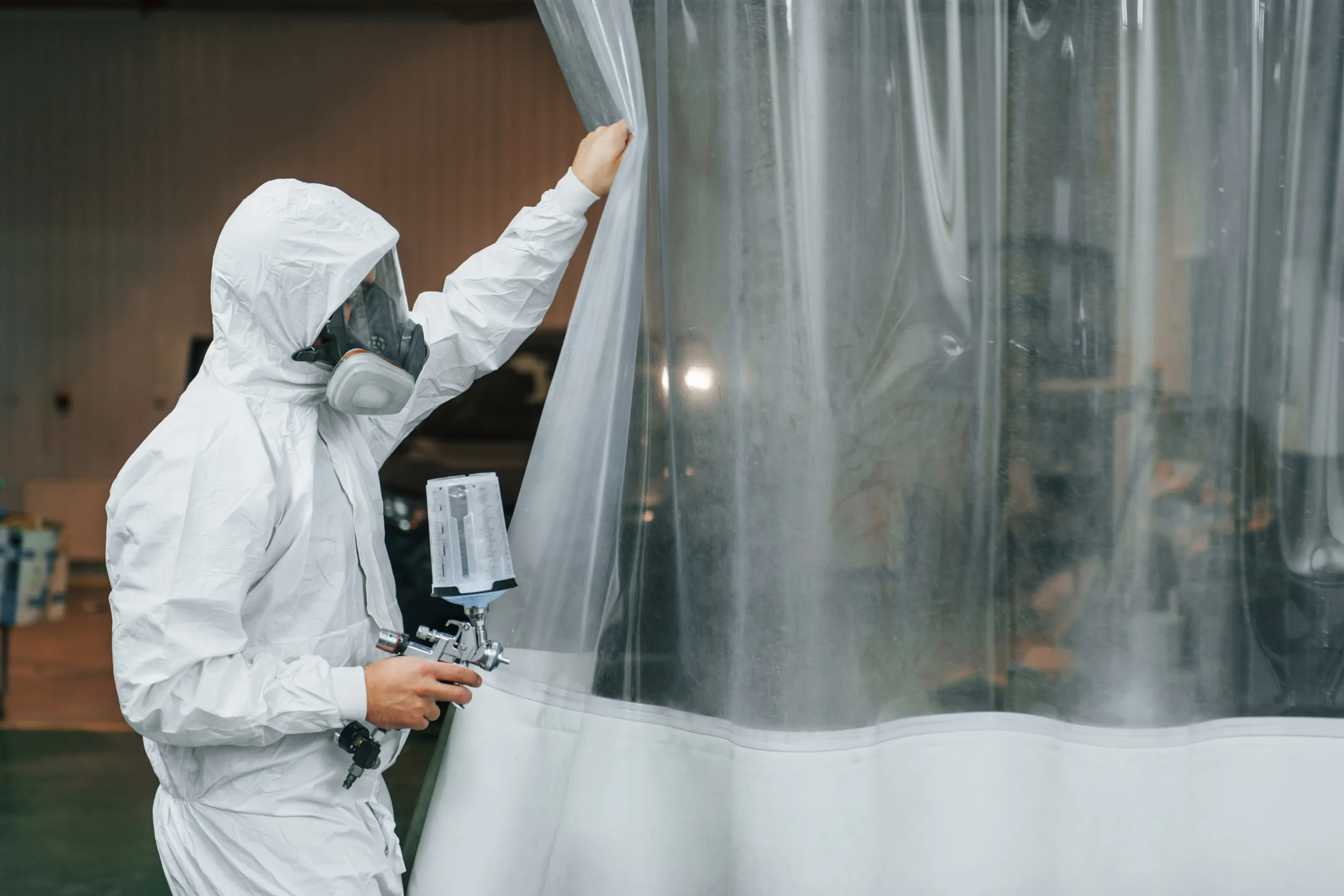
Containment is part of a larger control system
Poly barriers and negative-pressure equipment may be required, but containment alone does not make a project compliant. The work plan can also involve decontamination arrangements, respiratory protection, wet methods, HEPA cleaning, waste packaging, transport, inspection and air monitoring.
Requirements vary with the material, condition, quantity and task. “Zero fibre migration” and “100% safe” are not responsible promises. The goal is to complete the defined work under the applicable controls and verification criteria.
Saskatchewan asbestos requirements →Insurance and restoration events
When asbestos becomes part of a water or fire claim
Asbestos itself is often a pre-existing building condition, but confirmed material may affect the cost and method of accessing damage from an insured fire, pipe break or flood. Coverage depends on the policy, cause of loss, adjuster decisions and required work.
KB can document laboratory findings, abatement scope, disposal and reconstruction costs for communication with the property owner and insurer. Only the insurer can confirm coverage. See our property-damage insurance documentation service.
Asbestos answers
Regina homeowner FAQs
Clear answers for renovation planning without assuming every older house is contaminated.
Which Regina neighbourhood has the most asbestos?
No reliable public dataset ranks neighbourhoods by confirmed asbestos. Cathedral and Old Lakeview are high-priority testing areas because of their recognized heritage and character-building concentration. Heritage, North Central, Arnhem Place, Broders Annex and Al Ritchie also contain mature building stock. A neighbourhood is a screening cue, never a test result.
Does every Regina home built before 1990 contain asbestos?
No. Building age increases the likelihood of suspect legacy materials but does not confirm asbestos. Products vary by original construction, later renovations, supplier and room. Representative sampling and laboratory analysis are required for confirmation.
When should asbestos testing happen?
Testing should occur before renovation, demolition or restoration work disturbs suspect material. Give the assessor the full work scope so ceilings, flooring layers, drywall systems, insulation and mechanical materials within the disturbance area can be considered.
Can I collect an asbestos sample myself?
Sampling can release fibres and an unrepresentative sample can create false confidence. Use a qualified person who can choose suitable locations, avoid cross-contamination, document chain of custody and interpret results within the project scope.
Does asbestos always need to be removed?
No. Intact material outside the work area may sometimes remain in place under a management plan. Enclosure or encapsulation may also be considered. Removal is commonly required when work will disturb the material or its condition makes other approaches unsuitable.
How long does asbestos removal take?
There is no standard duration. Sampling turnaround, risk level, area, access, containment, decontamination, disposal, inspection and air-monitoring requirements all affect scheduling. Reconstruction follows on a separate timeline.
What does asbestos removal cost in Regina?
Cost depends on material type, quantity, friability, location, access, risk classification, containment, disposal, monitoring and reconstruction. An attic with vermiculite is fundamentally different from intact floor tile. See our Regina asbestos-removal cost guide.
Is asbestos removal covered by insurance?
Coverage depends on the policy and circumstances. Planned renovation abatement is often treated differently from asbestos controls required to repair a covered water or fire loss. Ask your insurer for a written coverage decision.
What happens after asbestos is removed?
The required inspection or verification is completed, containment is dismantled according to the work plan and project records are retained. KB can then coordinate replacement insulation, drywall, ceilings, flooring and finishes.
Do you handle commercial asbestos projects?
KB can coordinate asbestos work connected to commercial restoration or construction. Larger and occupied facilities may require surveys, consultant-written specifications, phased work, occupant communication and detailed clearance requirements.
Before you renovate
Have a suspect material in a Regina property?
Start with the exact rooms and materials your project will disturb.