

Water restoration sometimes requires removing drywall, flooring, insulation or ceiling materials. In an older property, those materials may contain asbestos. Demolition therefore cannot always begin as soon as standing water is extracted. Suspect materials may require assessment and testing before they are disturbed.
The Government of Saskatchewan states that employers and workers involved with asbestos must follow provincial occupational health and safety requirements. Its official asbestos handling guidance also references the Saskatchewan Asbestos Abatement Manual as a source of regulatory requirements and recognized practices.
Do not cut, scrape, sand, drill, break or collect a sample from suspect material yourself. Stop disturbance and have the actual work area assessed by an appropriate asbestos professional.
Which materials may contain asbestos?
Asbestos was incorporated into different building products and assemblies. The appropriate wording is that a product may contain asbestos until suitable evidence establishes what it is.
The condition, history and planned disturbance justify professional assessment or testing.
Age, size, colour or appearance alone does not confirm the material’s composition.
Why does water damage make asbestos more complicated?
Water damage can create an urgent need to access wet materials. However, uncontrolled demolition of suspect material may release asbestos fibres. The water and asbestos scopes must therefore be planned together rather than treating demolition as an automatic first step.
The exact order can change with safety, access, water category, material condition and project requirements. A broader property restoration plan should document these connected scopes and the responsibility for each stage.
Can you identify asbestos by looking?
Not reliably. A contractor should not tell a homeowner that a floor tile, plaster surface or wall system “definitely has asbestos” only because it appears old. Different products can look similar, and renovation layers can come from different periods.
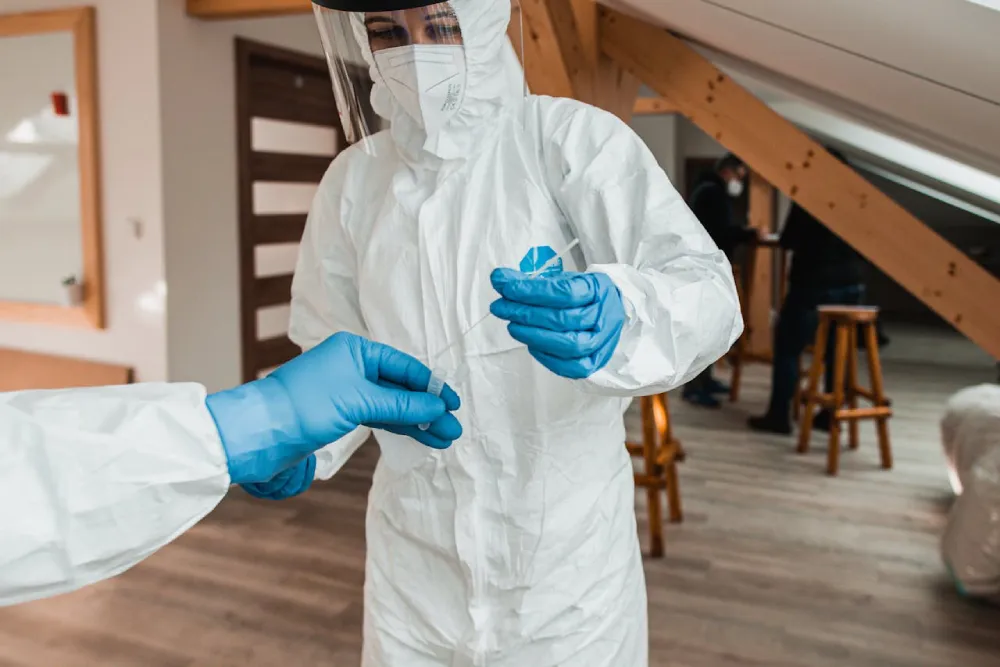
Testing supports the work decision
- Define which materials the project will disturb
- Have sampling planned and completed appropriately
- Keep samples and locations properly documented
- Use laboratory results to inform the work scope
- Do not assume one sample represents every layer or room
Why might testing happen before wet drywall removal?
Example: a pipe leak in an older finished basement
Water-restoration need
The lower section of a finished wall is wet. Access may be required to assess insulation, framing and moisture inside the cavity.
- Stop the plumbing source
- Extract accessible water
- Map the affected wall and floor
Asbestos question
Drywall joint compound, texture, patches or another associated material may be disturbed when the wall is cut.
- Identify the intended demolition boundary
- Assess suspect layers before cutting
- Use results to determine the appropriate work method
This assessment can add a necessary pause before demolition. The delay is not inactivity: it prevents the drying plan from creating a separate exposure hazard. Once the disturbance path is defined, water-damage restoration and structural drying can proceed through the appropriate controlled sequence.
What happens when the test is positive?
The project scope changes. The asbestos-containing material, planned activity and risk classification determine the controls, worker requirements, containment, removal or management approach, disposal and any required inspection or notification.
Define what must be disturbed for the water-damage repair and what can remain protected.
Qualified professionals follow the applicable Saskatchewan requirements and project procedures.
After the required asbestos stage, restoration continues based on remaining moisture and reconstruction needs.
KB Better Construction can coordinate assessment, asbestos removal in Regina, water restoration and the repair work required after affected finishes are removed.
Some high-risk asbestos processes require advance notification to Saskatchewan Occupational Health and Safety. The asbestos professional responsible for the scope should determine which regulatory requirements apply.
Can wet asbestos-containing material simply be dried in place?
There is no universal answer. The decision depends on the confirmed material, physical damage, location, water source, friability, access needs and whether planned drying or reconstruction will disturb it.
Questions about the material
- What product or assembly is confirmed?
- Is it intact, damaged or deteriorating?
- Will air movement or access disturb it?
- Does the water source create another contamination concern?
Questions about the repair
- Must the material be removed to reach hidden moisture?
- Can the assembly dry effectively without disturbance?
- What verification is required before reconstruction?
- Will future work disturb material left in place?
This is not a suitable do-it-yourself drying decision. The asbestos and restoration professionals should define how the material will be managed and how the remaining building assembly will reach the condition required for repair.
Why is coordination important?
When water extraction, asbestos work and reconstruction are treated as isolated jobs, information can be lost between handoffs. A coordinated scope allows each stage to prepare properly for the next.
Documents the source, moisture boundaries, affected assemblies and drying access needed.
Use the planned disturbance area to define assessment, testing and regulated work.
Plans replacement insulation, drywall, flooring and finishes after the area is ready.
This coordination is especially valuable when an older lower level must move from emergency access into a complete basement repair or renovation. The guide from restoration cleanup through reconstruction further explains why drying completion and repair readiness are separate project milestones.
The safest efficient process is not “demolish first and solve problems later.” It is to control the water, define the materials that must be disturbed, manage confirmed hazards correctly and preserve a clear path to drying and reconstruction.
Frequently asked questions
Can wet drywall contain asbestos?
Some older wall systems may contain asbestos in associated materials such as joint compound, plaster or texture. Testing may be needed when those materials will be disturbed.
Does old vinyl flooring contain asbestos?
Some older flooring products, backing materials or adhesives may contain asbestos. Age and appearance alone do not confirm it.
Do you need asbestos testing before removing wet drywall?
Testing may be needed when suspect material within the planned removal area will be disturbed. The decision should be based on the building materials and demolition scope.
Who regulates asbestos work in Saskatchewan?
Provincial occupational health and safety requirements apply to workplace asbestos processes. Government guidance and the Saskatchewan Asbestos Abatement Manual explain relevant requirements and practices.
Can reconstruction start immediately after abatement?
Not automatically. Required asbestos verification must be complete, and the area must also be ready from the water-restoration perspective. Remaining materials, drying and the repair scope still require assessment.
Water damage in an older Regina property?
Request a coordinated assessment before wet drywall, flooring, insulation or ceiling materials are disturbed.